How to Store Matcha Powder — and Whisk It Without Clumps
Matcha is a finely milled powder, and that is both its charm and its challenge. The same fineness that gives a bowl its smooth, creamy texture also means matcha reacts quickly to air, light, heat and moisture — and clumps the moment it meets water the wrong way. The good news is that neither problem needs special equipment or expertise. A few simple storage habits and one reliable whisking routine will keep your matcha tasting fresh and your bowl smooth, from the first scoop to the last.

Why Matcha Loses Its Freshness
Once tea leaves are milled into powder, far more of their surface is exposed to the air than with whole-leaf tea. Colour, aroma and flavour gradually fade when matcha sits in a warm, bright or humid place, and the powder readily absorbs surrounding odours — a real risk in a kitchen full of coffee, spices and cooking. That is why storage is not an afterthought. It is the first step of preparation, and it decides how good your matcha can taste before water ever touches it.
How to Store Matcha Powder at Home
Keep it sealed. Air is the main enemy. After every use, press the air out gently and reseal the pouch or close the tin carefully. If your matcha comes in a resealable pouch, make sure the seal is fully closed along its whole width.
Keep it cool, dark and dry. Store matcha away from heat, humidity, direct sunlight and strong odours — not beside the stove, the kettle or a sunny window. A kitchen cupboard away from cooking steam works well for everyday use.
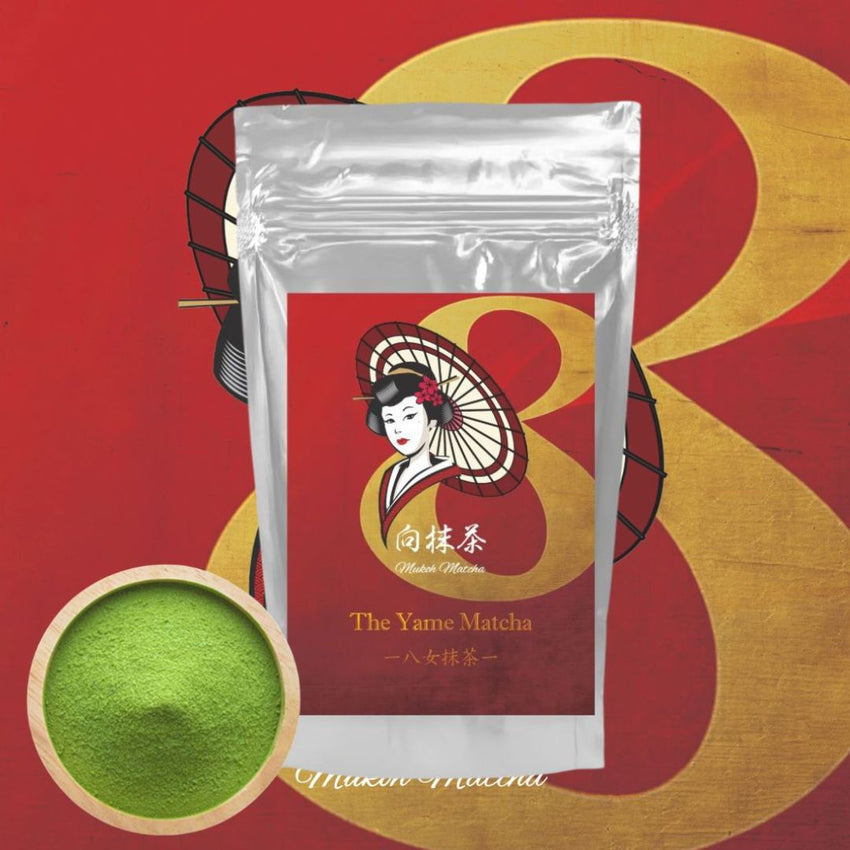
Open one pouch at a time. If you are working through several matchas — for example, the six varieties of a tasting set — you do not need to open them all at once. Keep unopened pouches sealed until you are ready for them, reseal an opened pouch carefully, and use it promptly while its aroma is at its best.
Mind the condensation. If you keep matcha in the refrigerator, let the sealed pouch return to room temperature before opening it. Opening a cold pouch straight away can let moisture condense onto the powder, which dulls flavour and encourages clumps.
Why Matcha Clumps — and Why It Is Not a Quality Problem
Almost every matcha drinker has seen it: green lumps floating in the bowl that no amount of stirring seems to break. Clumping is normal. Very fine powders naturally stick together because of static and light moisture, and matcha is milled exceptionally fine. Tipping powder into a full bowl of hot water traps dry pockets inside wet lumps, and a spoon simply pushes them around. Clumps say nothing bad about the matcha itself — they are a technique problem, and technique fixes them completely.
How to Whisk Matcha Without Clumps: Step by Step
1. Warm your bowl and whisk. Pour hot water into your bowl, dip the bamboo whisk (chasen) if you use one, then discard the water and dry the bowl. A warm bowl keeps the temperature steady, and a softened whisk works more gently and effectively.
2. Sift the powder. This single step prevents most clumps. Push about 2g of matcha — roughly two bamboo scoops or one level teaspoon — through a small fine-mesh sieve into the bowl. Sifting breaks up every lump before water is added.
3. Add a little water first. Pour in a splash of hot water — water that has just boiled and then rested briefly, rather than water at a rolling boil — and mix the powder into a smooth, thin paste with the whisk. A paste has nowhere for dry pockets to hide.
4. Add the rest and whisk in an M or W motion. Top up with the remaining water (about 70 ml in total is a common starting point for a bowl whisked with water) and whisk briskly back and forth in an M or W pattern, using your wrist rather than your whole arm, for about 15 to 20 seconds. You are whisking, not stirring in circles: the fast zigzag creates the fine foam that gives whisked matcha its soft texture.
5. Finish gently. Slow down for the last few strokes, drawing the whisk through the surface foam to break any large bubbles, then lift it out from the centre. The surface should look even and glossy, with a layer of fine foam.
Quick Fixes for Common Problems
Still lumpy? Next time, sift more carefully and make the paste stage thicker before adding the rest of the water. Tastes harsh? Your water may have been too hot; let it rest a little longer off the boil. Tastes thin? Measure the powder rather than guessing — small differences in a 2g scoop are easy to taste — and check that your stored matcha is still fresh and well sealed. Little foam? Whisk faster with the wrist, and make sure the powder was fully dissolved into a paste before the main whisking began.
A Simple Routine Worth Keeping
Good matcha at home comes down to a short routine: store the powder sealed, cool and dark; open one pouch at a time; sift before you whisk; start with a paste; and finish with a brisk M-shaped whisk. None of this takes more than a minute, and it protects the colour, aroma and flavour you chose the matcha for in the first place. Once the routine becomes habit, every bowl — whether it is your daily favourite or a new variety you are tasting for the first time — gets the chance to taste as it should.
New to Yame matcha, or comparing varieties side by side? Start with our Ceremonial Matcha Trial Set — six ceremonial-grade Yame matchas (TEN, MICHI, SAKURA, RED, #8 and AYAME), 20g of each in its own sealed pouch, so you can open one at a time, practise your whisking, and find your favourite.