Mukoh Matcha · Tea & everyday life
Matcha benefits.
Your questions,
answered.
Understand your tea. Find a routine that suits you.
Curious about matcha benefits, caffeine, or drinking green tea during menopause? Explore everyday questions, research findings and practical considerations—without turning a cup of tea into a medical promise.
Find your starting point ↓
Prepared by Mukoh Matcha, a tea retailer. Sources checked: 25 September 2026. General educational information, not personal medical advice. This guide has not been independently medically reviewed.
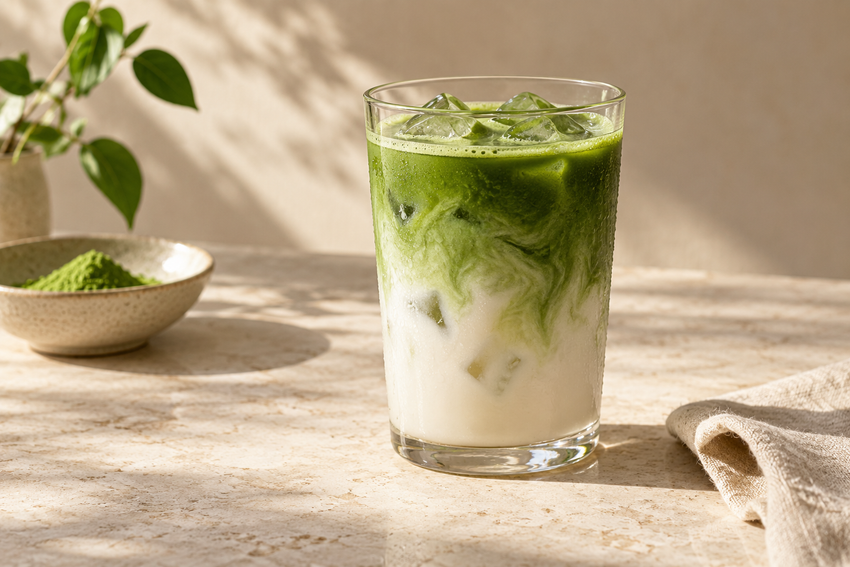
Lifestyle imagery is AI-generated for illustration. It does not depict customers, testimonials or health outcomes.
Start with your curiosity
What would you like to know?


The essentials
Is matcha the same as green tea?
Matcha is a type of green tea made by finely grinding tencha, a prepared tea leaf. You whisk the powder into a drink and consume it rather than removing the leaves after brewing. Infused green tea is made by steeping leaves in water. This guide uses “infused green tea” when making that distinction; it does not treat matcha and green tea as unrelated plants. [1] [2]
For an introduction to sencha, gyokuro and shincha, visit our Japanese Green Tea Guide.
Look a little closer
What is in matcha?
Catechins
Tea polyphenols, including EGCG, that researchers study in relation to health.
L-theanine
A tea amino acid studied alongside caffeine in research on attention and other outcomes.
Caffeine
A stimulant. Its effects depend on the amount consumed and individual sensitivity.
These constituents have been measured or investigated in matcha studies. Their presence alone does not prove a clinical benefit, and study compositions are not laboratory measurements of Mukoh Matcha products. [3] [4]
Beyond the headlines
What do studies say about matcha health benefits?
Attention: promising questions, limited conclusions
A small 2017 study involving 23 participants tested matcha drinks and snack bars against placebo versions. Some attention and response-speed measures improved, but mood did not significantly change. A separate 12-month trial in 99 older adults found no significant improvement in its main cognitive or daily-function outcomes, although a secondary emotional-perception measure improved. These findings do not establish that drinking matcha treats anxiety, prevents dementia or improves everyone's concentration. [3] [5]
Weight and cholesterol: distinguish the product studied
The U.S. National Center for Complementary and Integrative Health describes possible modest weight effects and small cholesterol changes in research on green tea products. Much of the cholesterol research used concentrated extracts rather than ordinary drinks. Results cannot simply be transferred to a particular matcha, a latte recipe or an individual customer. [1]
Your cup, your serving
Matcha vs. coffee: how much caffeine is in a cup?
Both drinks contain caffeine, and “one cup” is not a standard dose. Powder quantity, product composition and serving size matter. Do not assume that every matcha serving contains less caffeine than every coffee. For product-specific information, check the label or ask the supplier. [4]
For most adults, the FDA cites 400 mg per day as an amount not generally associated with negative effects. This is not a target or a guarantee of personal tolerance: some people need substantially less. Count caffeine from all sources. Anxiety, palpitations and sleep disruption can be signs that an intake is unsuitable. [4]

Make room for the everyday
Can I drink matcha every day?
There is no single ideal number of cups for everyone. As a practical starting point, measure the amount you use, follow the product's preparation instructions and notice how it fits alongside your other caffeinated drinks. There is no need to drink more tea in pursuit of a health effect.
If caffeine affects your sleep, consider a smaller serving earlier in the day, or a caffeine-free alternative. This is a tolerance-based adjustment, not a treatment for insomnia. If you regularly consume a lot of caffeine and decide to cut back, the FDA advises doing so gradually. [4]
Is a matcha latte the same as plain matcha?
A drink made only from pure matcha and water has no added sugar. Sweetened mixes, syrups and milk change the finished recipe and its nutrition. Check the ingredients and serving information for the whole drink rather than relying on the word “matcha.” A latte can be a taste preference without needing to be presented as a health treatment.
For preparation ideas, explore our Matcha Menu & Recipes.

A closer look · changing life stages
Matcha, green tea & menopause: common questions
Questions about tea may become more personal during perimenopause—the transition leading up to menopause—and afterward. Hot flashes, night sweats, sleep difficulties, low mood and changes in concentration can occur, but experiences differ. [6]
Explore the questions below. Tea is not a substitute for appropriate medical care.
Can matcha relieve menopause symptoms or “balance hormones”?
The research summarized here does not establish ordinary matcha or green tea as a treatment for menopause symptoms or as a way to restore estrogen levels. We do not recommend using tea in place of hormone therapy or other appropriate care. The 2023 North American Menopause Society position statement does not recommend supplements or herbal remedies as evidence-based treatment for hot flashes. That is not a ban on enjoying tea as a beverage; it is a distinction between a food and a treatment. [7]
Can caffeine make hot flashes or night sweats worse?
The NHS lists caffeine and hot drinks among possible triggers that people can try reducing. However, the 2023 menopause position statement does not recommend trigger avoidance as an established hot-flash treatment. These are different levels of advice: noticing a personal trigger may guide your choices, but caffeine reduction is not a proven cure and not everyone needs to avoid tea. [8] [7]
As a practical observation, note the amount and time of your tea alongside symptoms. If you notice a consistent problem, try less caffeine or a caffeine-free drink. A cooler drink may feel preferable, but iced matcha still contains caffeine.
What about sleep and menopause-related brain fog?
Do not assume that L-theanine makes caffeinated matcha a sleep aid. A 2024 placebo-controlled study of daily matcha capsules found no significant between-group improvement in the main sleep measurements, including total sleep time and sleep efficiency. Some subjective findings were only statistical trends. It was not a trial establishing treatment for menopausal insomnia. The cognitive studies described above likewise do not establish a treatment for menopause-related brain fog. [2] [5]
Will matcha help with menopause-related weight gain?
Do not rely on matcha as a targeted weight-loss remedy. General green-tea research does not establish a meaningful, menopause-specific weight benefit from a particular cup or product. The complete eating pattern and the ingredients in a latte still matter. [1]
Worth knowing
Safety, medicines & concentrated extracts
Ordinary tea drinks and concentrated green-tea extract supplements are not interchangeable. NCCIH notes reports of liver injury primarily with extract tablets or capsules, and interactions with certain medicines. If you take medicines, ask a pharmacist or clinician whether your tea habits or any supplement need adjustment; do not change prescribed treatment yourself. Pregnancy and breastfeeding also call for individualized caffeine advice. [1]
Sources & research notes
These references explain the information above; they do not endorse Mukoh Matcha or verify its individual products. Research on another product, an isolated ingredient or a concentrated extract is not a product-specific claim. Several matcha trials cited below involved tea-industry researchers or support; their designs and limitations should be considered alongside their findings.
- NCCIH: Green Tea. Public-health summary of evidence, extract-versus-beverage distinctions and safety. Updated February 2025.
- Baba et al. (2024): randomized matcha and sleep trial. Nutrients 16:2907. No significant benefit on the main objective sleep measures; not a menopause-treatment trial.
- Dietz et al. (2017): matcha drinks, snack bars and cognitive performance. Small, short-term intervention with 23 participants; selected attention findings, not a general mood benefit.
- FDA: How Much Caffeine Is Too Much?. Individual sensitivity, total intake and symptoms of excess caffeine.
- Uchida et al. (2024): 12-month matcha trial in older adults. PLOS ONE 19:e0309287. The main cognitive and daily-function outcomes did not significantly improve.
- NHS: Menopause and perimenopause symptoms. Reviewed 19 May 2026.
- North American Menopause Society: 2023 nonhormone therapy position statement. Menopause 30:573–590. Evidence-based treatment guidance, including limitations of supplements and trigger avoidance for hot flashes.
- NHS: Things you can do for menopause and perimenopause symptoms. Practical lifestyle guidance, reviewed 19 May 2026.
This is a general introduction, not an exhaustive systematic review. Evidence and guidance can change. Discuss personal health decisions with a qualified healthcare professional.
Images are AI-generated editorial illustrations. They are not photographs of Mukoh Matcha customers, evidence of health effects, or a guarantee of product appearance. Tableware and props are illustrative.