Japan · Kyushu · Fukuoka · Yame
Discover Yame.
The home of our matcha.
Before your first sip, meet the place behind it. Discover a tea tradition shaped by generations of care—and find the Yame matcha you will want to make your own.
More than a name on a pouch
A place to know.
A taste to discover.
Yame lies in Fukuoka Prefecture on Japan’s southern island of Kyushu. The wider Fukuoka tea region includes Yame and surrounding growing areas; “Yame tea” is a regional origin, not a single tea variety.
The region’s tea story is traditionally traced to 1423. That is more than six centuries of tea culture—the heritage of the place we are proud to introduce.[1]
Sencha, gyokuro and matcha offer different ways to experience this origin. For us, the pleasure is in discovering those differences, one cup at a time.

A small share. A distinct origin.
Understand the scale behind the name.
~2%
2019 · A regional snapshot
In the official regional council’s 2019 production chart, Fukuoka accounted for approximately 2% of crude tea production across Japan’s surveyed major producing prefectures: 1,780 tonnes.[2]
1423
A story with roots
The traditional starting point of Yame’s tea history. The appeal is not simply that a tea is scarce, but that its place and character are worth getting to know.
100%
Our Yame matcha origin
The matcha in our Yame matcha range is made from tea grown in Yame, Fukuoka. A single cultivar or a blend of cultivars can share this same origin.
Source: the regional council’s 2019 chart, based on a survey of 11 major tea-producing prefectures. This historical figure includes several tea types. It is not a current market share or a statistic for Yame matcha alone.

Quality is a practice
Care you can learn about.
Character you can taste.
Yame’s reputation includes its traditional hon gyokuro, made under specific cultivation and production requirements, including straw shading and hand-picking.[3] This is a distinct tea tradition—not a claim that every Yame matcha is hand-picked or made in exactly the same way.
For matcha, tea is grown under shade before harvest and processed into tencha, which is then milled into powder. Cultivar, harvest and processing all help shape the finished cup.[4]
At Mukoh Matcha, our matcha is milled using a ceramic ball mill, not a stone mill. We share the method openly, so you know how the tea in your bowl is made.
What makes a selection limited?
A region is not an unlimited supply.
Choosing a specific origin narrows the source. Choosing a particular cultivar, harvest and taste profile narrows the selection further. First-flush tea belongs to a seasonal harvest: the regional council describes Yame’s first picking as beginning around mid-April and peaking in early May.[1]
Each selection brings together a place, a season and a particular character. Availability differs between teas; the most meaningful choice is the one whose taste you look forward to.
Our invitation: know the origin, understand the selection, then let your own palate decide.
Four real matchas · Six first sips to discover
Now imagine
your first bowl.
Choose TEN, Sakura, MICHI or #8 and watch the actual matcha being prepared. Notice the powder, the whisk and the foam gathering in the bowl. Which one makes you want your first sip?
When you taste, pause for the aroma before taking a sip. Notice the balance of freshness, savory depth, gentle sweetness and the finish. Your favorite may reveal itself in the second sip.
Natural sweetness means a subtle tea quality, not added sugar. These videos were filmed separately; lighting and preparation differ, so they are not a controlled color comparison.
Watch Our Matcha Come to Life
Choose a tea. See it whisked.
Now showing: TEN · 26 seconds
Four real matchas to watch; all six varieties to taste in the Trial Set. Colors vary with lighting and your screen. The set comes in plain silver pouches, not the branded retail packs shown. Bowls, tools and milk are not included.
Open selected video ↗Mukoh Matcha · Our origin promise
Know what “100% Yame” means.
Origin, not just packing
For our Yame matcha, the tea is grown in Yame, Fukuoka—not simply packed in Japan. Mukoh Matcha is operated by World Peace Inc., Japan.
One origin, different cultivars
TEN is 100% Okumidori. MICHI is a blend of Saeakari, Kirari 31, Saemidori and Tsuyuhikari. Blending cultivars does not mean blending countries or regions.
Clear ingredients
Pure matcha and sweetened matcha are different products. For Sweet Matcha, “100% Yame” describes the origin of the matcha ingredient—not a claim that the entire sweetened product is pure matcha.
Questions about a specific product’s cultivar, harvest or ingredients? Ask our team before ordering.
A little clarity before your first cup
Your questions, answered.
Is all Yame tea matcha?
No. Yame identifies an origin. Sencha, gyokuro and tencha for matcha are different tea types made in the region. Powdered sencha and powdered gyokuro should not be confused with tencha-based matcha.
Does Yame matcha always taste the same?
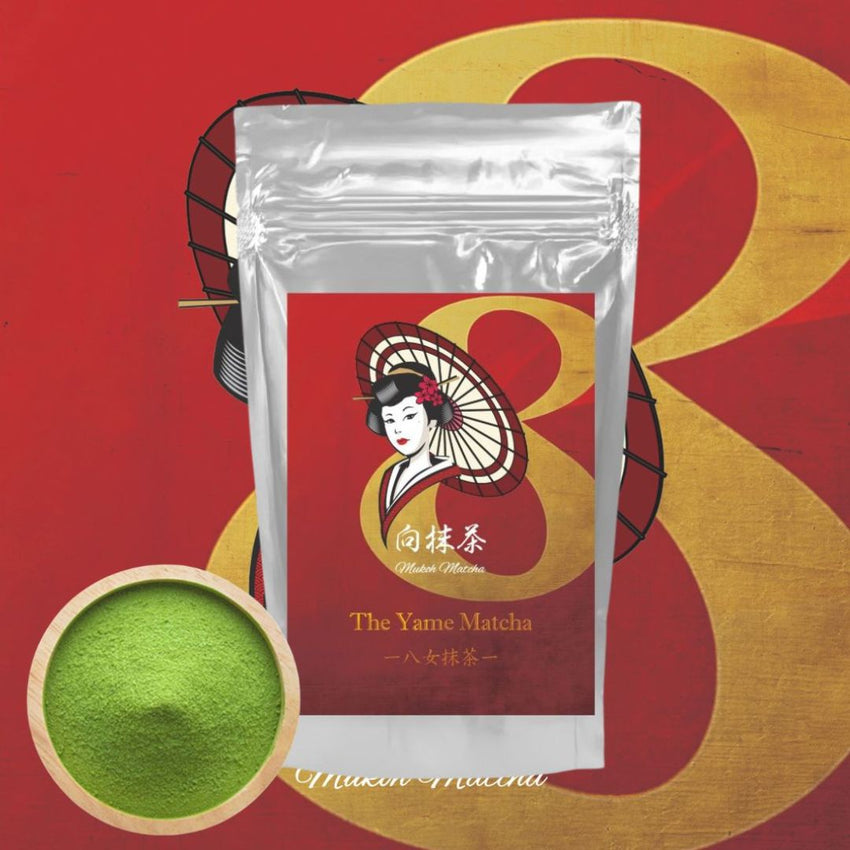
No. Cultivar, harvest, processing and preparation create different expressions. The Trial Set lets you compare TEN, MICHI, SAKURA, RED, #8 and AYAME instead of choosing by a grade name alone.
Is Ceremonial Grade or Culinary Grade right for me?
Use these labels as a starting point, then look at the individual tea. Explore our ceremonial range for drinking with water. For lattes and sweets, Fuji and Kiku are options in our café and wholesale collection. A higher price does not automatically mean a better match for every recipe.
Do Yame’s tea awards apply to every product?
No. An award belongs to the specific entry and category that earned it. The reputation of traditional Yame gyokuro is not a claim that Mukoh Matcha products—or all Yame matcha—have won those awards.

From knowing Yame to tasting it
One origin.
Six ways to fall in love.
You do not have to choose your favorite before your first sip. Taste TEN, MICHI, SAKURA, RED, #8 and AYAME side by side and discover which cup you want to return to.
Choose 20g, 30g, 50g or 100g of each variety. The 20g set contains 120g in total—about 60 servings at 2g per serving.
Bowls and tools are not included. Check the product page for current prices and availability; shipping is calculated at checkout.