How to Tell If Your Matcha Is Really Japanese
แชร์
Matcha is more popular than ever—but as the market grows, choosing a truly Japanese matcha has become more confusing.
A beautiful green package, Japanese characters, or the word “ceremonial” may create a Japanese impression. Yet none of these details, by themselves, proves where the tea was grown or how it was produced.
If you want authentic Japanese matcha, you need to look beyond the front of the package. Origin, ingredients, harvest information, freshness, flavor, and traceability all tell a more complete story.
Here is how to make a more confident choice.
1. Check the country of origin—not only the package design
The first question should be simple:
Where were the tea leaves actually grown?
Japanese words, images of Mount Fuji, cherry blossoms, or a traditional tea bowl are design elements. They are not proof of origin. Look for a clear statement such as:
- Product of Japan
- Grown in Japan
- Origin: Japan
- 100% Japanese matcha
A transparent seller should also be able to identify the producing region. Well-known Japanese tea regions include Uji in Kyoto, Nishio in Aichi, parts of Kagoshima and Shizuoka, and Yame in Fukuoka.
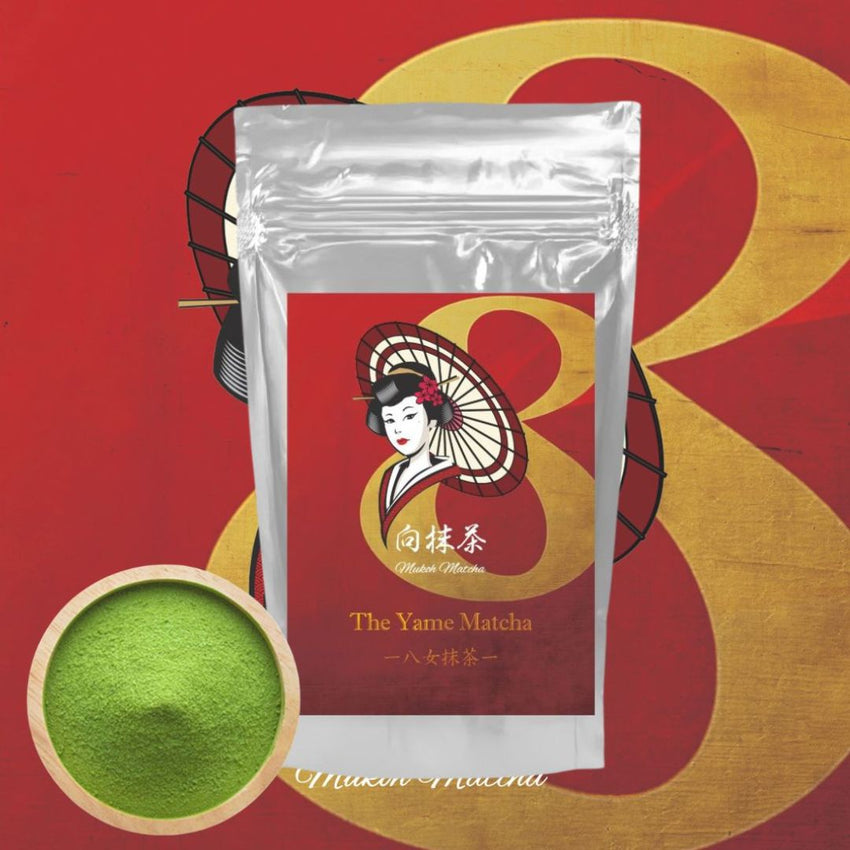
At Mukoh Matcha, our matcha is sourced from Yame, Japan—a region celebrated for teas with deep umami, refined sweetness, and an exceptionally smooth finish.
2. Read the ingredient list
Pure matcha should have a very short ingredient list:
100% matcha green tea powder.
Some products sold as matcha latte powder contain sugar, milk powder, flavoring, coloring, or other ingredients. These products may be convenient and enjoyable, but they are not the same as pure matcha.
The ingredient list alone does not prove Japanese origin. It does, however, tell you whether you are buying pure tea or a prepared drink mix.
3. Do not rely on the words “ceremonial grade” alone
“Ceremonial grade” is widely used to describe matcha intended for drinking with water. However, in international retail it is a commercial description, not a protected guarantee of origin, harvest quality, cultivar, or production method.
A product can display “ceremonial grade” prominently while providing very little information about the tea itself.
Instead of trusting one phrase, look for specific details:
- Country and region of origin
- Harvest season
- Tea cultivar or blend
- Intended use—traditional preparation, latte, or culinary
- Packing location
- Storage and freshness guidance
The more precise the information, the easier it is to understand what you are actually buying.
4. Look at the color—but do not judge by color alone
Fresh, high-quality matcha is generally a vivid, lively green. Shade-growing encourages the tea leaves to retain chlorophyll and develop the amino acids associated with umami and sweetness.
A dull yellow-green or brownish color may suggest mature leaves, oxidation, age, unsuitable storage, or a powder produced for cooking rather than drinking.
Color is useful, but online photographs can be edited and lighting can change how matcha appears. For that reason, color should be considered together with aroma, taste, origin, and freshness—not used as the only test of quality.
5. Notice the aroma, texture, and taste
Before adding milk or sweetener, prepare a small amount of matcha with water. This reveals the character of the tea more clearly.
High-quality Japanese matcha may vary by region and cultivar, but it often offers:
- A fresh, clean aroma
- A very fine, silky texture
- Natural sweetness
- Deep or gentle umami
- Balanced bitterness and astringency
- A clean finish without a harsh aftertaste
Bitterness is not automatically a sign of poor quality. Water that is too hot, too much powder, or an unsuitable matcha-to-water ratio can make even good matcha taste unpleasant. Still, matcha intended for traditional drinking should not depend on large amounts of sugar to hide persistent harshness.
6. Ask whether the matcha suits the way you drink it
There is no single matcha that is best for every purpose.
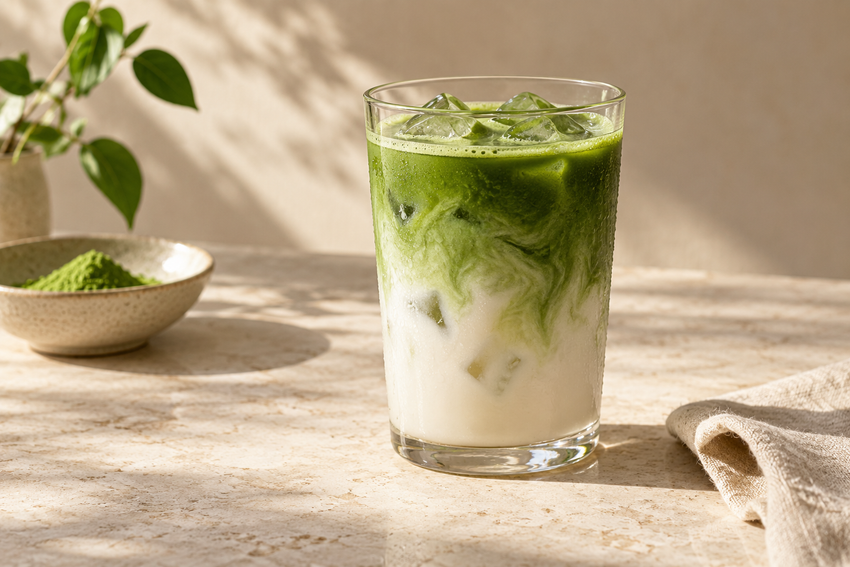
A delicate, umami-rich first-harvest matcha may be beautiful when whisked with water, but its subtle character can disappear behind milk and syrup. A matcha selected for lattes may have a stronger aroma and flavor so that its identity remains present in the finished drink.
Before buying, ask:
- Will I drink it traditionally with water?
- Will I make hot or iced matcha lattes?
- Will I use it in desserts or baking?
- Do I prefer deep umami, natural sweetness, freshness, or a stronger tea finish?
A trustworthy matcha seller should help you choose by flavor and use—not simply direct everyone toward the most expensive product.
7. Look for harvest, cultivar, and regional information
Matcha becomes easier to appreciate when its identity is visible.
The harvest season can influence sweetness, strength, color, and price. The cultivar can also shape the experience. Okumidori is often associated with deep green color and a smooth, rich profile. Saemidori can offer vivid color, elegance, and sweetness. Yabukita may provide a fresh aroma and a balanced, recognizable Japanese tea character.
Blends can be equally exceptional. A skilled blend may combine cultivars to create greater balance, complexity, consistency, or length of finish.
These details are not required for someone to enjoy matcha. But when a producer or seller provides them, it demonstrates a deeper level of product knowledge and traceability.
8. Freshness and packaging matter
Matcha is sensitive to air, heat, light, moisture, and strong odors. Once opened, its aroma and vivid color gradually decline.
Choose matcha packed in an opaque, tightly sealed container or foil pouch. After opening, close it carefully, keep it cool and dry, and use it while its aroma is still fresh. If refrigerated, allow the sealed package to return to room temperature before opening so condensation does not reach the powder.
Large packages may appear economical, but they are not always the best choice for a household that drinks matcha occasionally. Buy a quantity you can enjoy while it remains fresh.
9. Be cautious when the price and the story do not match
Authentic Japanese matcha requires specialized cultivation and processing. Tea plants are shaded before harvest, the leaves are carefully processed into tencha, and the finished tea is ground into an extremely fine powder. Premium raw materials are limited, and producing them requires time, skill, and experienced labor.
A low price does not automatically prove that a matcha is inauthentic. However, an unusually inexpensive product making exceptional quality claims should encourage you to check the origin, harvest information, ingredients, and seller transparency more carefully.
A simple checklist before you buy
Before ordering matcha online, confirm as many of these points as possible:
- The country of origin is clearly stated
- The producing region is identified
- The ingredient list contains only matcha
- The seller explains the intended use
- Harvest or cultivar information is available
- The powder is protected from light and air
- The flavor is described specifically—not only as “premium”
- The seller can answer questions about sourcing and freshness
Why Yame Matcha?
Yame, located in Fukuoka Prefecture, has a long tradition of producing distinguished Japanese green tea. Its tea-growing environment and accumulated craftsmanship are especially suited to teas with sweetness, umami, depth, and elegance.
For matcha drinkers who want more than brightness or bitterness, Yame offers a beautifully refined experience. Depending on the cultivar and blend, its character can range from fresh and graceful to creamy, rich, and deeply savory.
This is the world of matcha we want to share.
The Mukoh Matcha promise
At Mukoh Matcha, Japanese origin is not a decorative idea. It is our promise.
100% JAPANESE. ALWAYS.
Our matcha is grown in Japan, produced in Japan, packed in Japan, and shipped from Japan. We provide origin, cultivar, harvest, and flavor information whenever available so that customers can choose with confidence.
Whether you are discovering matcha for the first time, searching for an exceptional bowl, or selecting a dependable matcha for your café, we invite you to experience the depth and refinement of Yame.